Reference : von Rotz, R., Schindowski, E. M., Jungwirth, J., Schuldt, A., Rieser, N. M., Zahoranszky, K., Seifritz, E., Nowak, A., Nowak, P., Jäncke, L., Preller, K. H., & Vollenweider, F. X. (2022). Single-dose psilocybin-assisted therapy in major depressive disorder: A placebo-controlled, double-blind, randomised clinical trial. EClinicalMedicine, 56, 101809.
Increasing excitement exists within the medical community around the apparent wonder-drug potential of psilocybin in treating severe depression, with new countries giving psilocybin-based interventions the go-ahead every week. But how exactly does this treatment work, and how much confidence does current research have in psilocybin’s efficacy?
It’s no wonder why the medical community is desperate to find new treatments: depression is a major public health problem, affecting more than 300 million people worldwide and costing more than $200 billion a year in the USA alone. Unfortunately, depression’s role as a leading cause of disability worldwide is only growing. The World Health Organization currently ranks it as the third largest contributor to the burden of disease (which is measured in terms of cost to treat and the impact of living with depression), and they predict depression will likely hold the disreputable first place by 2030.
Although many people find relief in the pharmaceutical treatments currently available, some major treatment gaps remain. Most people suffering from depression don’t experience complete symptom relief on antidepressants, and around 30% are treatment resistant, meaning they don’t respond to treatment at all. This finding, coupled with the long-term commitment and range of negative side effects from antidepressants, is part of why researchers have been keen to find alternative treatments for symptoms of depression.
Could Psilocybin be the answer?
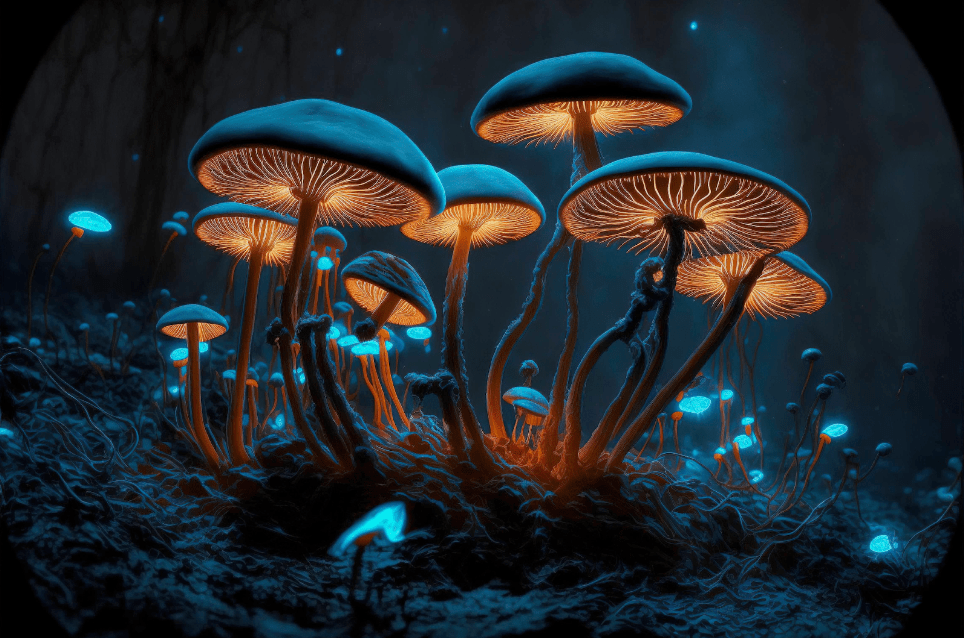
Psilocybin is a mushroom extract produced by over 200 species of fungi, most famous for its hallucinogenic properties which have been used in religious and healing ceremonies for thousands of years. Psychedelic research itself is also nothing new, with scientists in Europe using psilocybin to try and model psychosis since the 1920s. However, as negative cultural associations in the West between psychedelic use and the hippie counterculture movement grew, a moral panic set in that saw most of the initial psychedelic research quickly shut down. The stigma surrounding psychedelic research was only exacerbated by later studies suggesting potential links between hallucinogenic use and mental health issues such as psychosis.
One of the key voices to buck this trend was R. D. Laing, a Scottish psychiatrist who gained fame, and later notoriety, for his ‘anti-psychiatry’ stance. He argued for a reformed view of psychosis, and in doing so helped bring counterculture ideas back into the research lab.
This new psychedelic research, that really took off in the ‘90s, mounted major challenges to the old fears of a link between psychedelic use and mental health issues. Researchers began finding that not only was this connection tenuous, but if anything people who had used psychedelic substances had lower rates of psychological distress and suicidality than people who’d taken a comparable amount of other recreational drugs. Further, anecdotal reports of positive effects on anxiety and obsessive-compulsive symptoms increased support for the view that when taken in a safely controlled environment, psilocybin might have a beneficial role to play in alleviating major depressive disorders.
How does Psilocybin work?
Most of the current first-line antidepressants (like fluoxetine, sertraline, and escitalopram) are based on the idea that increased serotonin reduces the symptoms of depression. After neurons have fired their serotonin, other molecules step in to help mop up the excess serotonin, and it gets reabsorbed back into the neuron’s synapse. Most antidepressants work to prevent this reabsorption so that there is an increased amount of serotonin at any given time.

One theory as to how psilocybin might help depression stems from the fact it mediates a slightly different serotonin receptor that traditional medication hasn’t focused on. In animal studies, researchers have associated substances with a similar chemical composition to psilocybin with various cognitive benefits like enhanced thinking flexibility, increased neuronal activity, and improved learning capacities. In humans, psychedelic experiences are linked to sustained changes in life satisfaction and increased feelings of personal meaning. With this in mind, researchers began to focus on the role psilocybin might play in helping people who were treatment resistant to traditional antidepressants, and found promising first results. The research typically focused on people living with terminal cancer who were offered varying doses of psilocybin alongside psychotherapy.
Whilst the results appeared promising, some of the limitations of the study highlighted where more research was needed. What would results be like for people in a wider group, not just those with terminal cancer? How much of the positive impact could be ascribed to psilocybin itself, and not the other treatments being offered alongside it, like psychotherapy? And if psilocybin was driving the positive findings, what would be the ideal dosage?
Von Rotz’s study seems to be the first addressing this crucial gap by directly comparing the effects on depression symptoms between a single dose of psilocybin and a placebo.
What did they do?
Between 2019 and 2021, researchers took a group of 52 participants who met the criteria for a depressive episode in the context of major depressive disorder. Participants were randomly assigned to one of two groups: (1) the psilocybin group, who received a single, moderate dose of psilocybin in the form of a pill, or (2) the control group, who received a placebo pill that was similar in size, weight, shape, and color to the psilocybin group’s pill but contained no active ingredients. Participants in both groups also received an equal amount of psychological support, which involved a 60 minute counselling session at every visit.
In order to reduce the influence of a perceived antidepressant effect caused by taking a novel treatment, and make sure any observed changes were more likely assignable to the psilocybin than the research environment as a whole, participants came back for 7 visits over a three-week period and filled out widely-used diagnostic scales measuring depressive symptoms each time. On the day the pills were administered, participants sat in a living-room-like environment and listened to a standard playlist through headphones or speakers. Their only instruction was to immerse themselves in the experience and keep an introspective focus.
Summary of the key findings
The researcher’s primary outcome measure was based on the results of the self-reported scales that participants had filled out at each visit, with the primary measure endpoints being the results on visit 2 (which was 4-6 days before drug administration) and the 7th, last visit which was 14 days after drug administration, to give a picture of the sustainability of the effects. When comparing the ratings on these visits, the psilocybin group showed a decrease in symptom severity on both scales compared to the placebo group. The changes were maintained at the 14-day follow-up, with 54% of the psilocybin group meeting remission criteria on the depression-symptom scale compared to only 16% of the control condition.
Importantly, the researchers also used hourly blood pressure monitoring to measure tolerability to the dose against negative side effects like increased cardiovascular activity and blood pressure. Such side effects could deter people from trying psilocybin-based treatments. Here the researchers found the lower dose was tolerable on measures of physical side effects, while not compromising the overall effect of decreasing symptoms.
Future Directions
The finding that psilocybin still has an effect on symptoms even after two weeks suggests it could work as a treatment to take at regular intervals. Whilst this is great news, there’s still some room for future research to answer some of the questions that remain unclear: will this same positive effect carry on over a longer period, or does it drop off over time? Because this study was conducted in Switzerland on a mainly White-identifying group of participants, can the same effects be observed in the wider population or might different ethnicities and backgrounds have different responses?
Although this study appears to have come closer to finding the still-contested Goldilocks dosage of psilocybin, strong enough to have a positive effect but not so much to start initiating some of the negative side effects, further studies into the action-dose relationship might help better pinpoint this figure. As psilocybin treatments are increasingly being given the green light globally, finding the optimal dosage to elicit a response without falling back into the side-effects trap that’s dogged most of the current antidepressant medication will become increasingly important.
Image : (1) Psilocybin mushrooms. Accessed 03.20.2023. Link
Additional References:
1. Greenberg, P. E., Fournier, A. A., Sisitsky, T., Pike, C. T., & Kessler, R. C. (2015). The economic burden of adults with major depressive disorder in the United States (2005 and 2010). The Journal of clinical psychiatry, 76(2), 155–162. https://doi.org/10.4088/JCP.14m09298
2. Bains, N., Abdijadid, S. (2022) Major Depressive Disorder. StatPearls Treasure Island https://www.ncbi.nlm.nih.gov/books/NBK559078/
3. Ślifirski, G., Król, M., & Turło, J. (2021). 5-HT Receptors and the Development of New Antidepressants. International journal of molecular sciences, 22(16), 9015. https://doi.org/10.3390/ijms22169015
4. Voineskos, D., Daskalakis, Z. J., & Blumberger, D. M. (2020). Management of Treatment-Resistant Depression: Challenges and Strategies. Neuropsychiatric disease and treatment, 16, 221–234. https://doi.org/10.2147/NDT.S198774
5. Ferguson, J. M. (2001). SSRI Antidepressant Medications: Adverse Effects and Tolerability. Primary care companion to the Journal of clinical psychiatry, 3(1), 22–27. https://doi.org/10.4088/pcc.v03n0105
6. Beringer, K. (1923). Experimentelle psychosen durch mescalin. Zeitschrift für die Gesamte Neurologie und Psychiatrie, 84(1), 426–433. 10.1007/BF02896052
7. Friesen, P. (2022). Psychosis and psychedelics: Historical entanglements and contemporary contrasts. Transcultural psychiatry, 59(5), 592–609. https://doi.org/10.1177/13634615221129116
8. Johansen, P. Ø., & Krebs, T. S. (2015). Psychedelics not linked to mental health problems or suicidal behavior: a population study. Journal of psychopharmacology (Oxford, England), 29(3), 270–279. https://doi.org/10.1177/0269881114568039
9. Hendricks, P. S., Thorne, C. B., Clark, C. B., Coombs, D. W., & Johnson, M. W. (2015). Classic psychedelic use is associated with reduced psychological distress and suicidality in the United States adult population. Journal of psychopharmacology (Oxford, England), 29(3), 280–288. https://doi.org/10.1177/0269881114565653
10. Leonard, H. L., Rapoport, J. L. (1987) Relief of obsessive-compulsive symp-toms by LSD and psilocin (letter). Am J Psychiatry, 144,1239–1240
11. Johnson, M., Richards, W., & Griffiths, R. (2008). Human hallucinogen research: guidelines for safety. Journal of psychopharmacology (Oxford, England), 22(6), 603–620. https://doi.org/10.1177/0269881108093587
12. Carhart-Harris, R. L., Bolstridge, M., Rucker, J., Day, C. M. J., Erritzoe, D., Kaelen, M. (2016). Psilocybin with psychological support for treatment-resistant depression: an open-label feasibility study. The Lancet, 3(7), 619-627. https://doi.org/10.1016/S2215-0366(16)30065-7
13. Boulougouris, V., Glennon, J. C., & Robbins, T. W. (2008). Dissociable effects of selective 5-HT2A and 5-HT2C receptor antagonists on serial spatial reversal learning in rats. Neuropsychopharmacology : official publication of the American College of Neuropsychopharmacology, 33(8), 2007–2019. https://doi.org/10.1038/sj.npp.1301584
14. Vaidya, V. A., Marek, G. J., Aghajanian, G. K., & Duman, R. S. (1997). 5-HT2A receptor-mediated regulation of brain-derived neurotrophic factor mRNA in the hippocampus and the neocortex. The Journal of neuroscience : the official journal of the Society for Neuroscience, 17(8), 2785–2795. https://doi.org/10.1523/JNEUROSCI.17-08-02785.1997
15. Harvey, J. A. (2003). Role of the serotonin 5-HT(2A) receptor in learning. Learning & memory (Cold Spring Harbor, N.Y.), 10(5), 355–362. https://doi.org/10.1101/lm.60803
16. Griffiths, R., Richards, W., Johnson, M., McCann, U., & Jesse, R. (2008). Mystical-type experiences occasioned by psilocybin mediate the attribution of personal meaning and spiritual significance 14 months later. Journal of psychopharmacology (Oxford, England), 22(6), 621–632. https://doi.org/10.1177/0269881108094300
17. Quilty, L. C., Robinson, J. J., Rolland, J. P., Fruyt, F. D., Rouillon, F. and Bagby, R. M. (2013), The structure of the Montgomery–Åsberg depression rating scale over the course of treatment for depression. Int. J. Methods Psychiatr. Res., 22, 175-184. https://doi.org/10.1002/mpr.1388
 cogbites