Welcome back to our cogbites interview series, where we interview cognitive scientists by asking them a few questions about their interests in science and what keeps them engaged both in and out of the lab.
As a reminder, you can learn a little about our own team of contributors by reading their bios (either on our author page or at the bottom of each post), but this is a chance to get to know some early-career scientists even better. Our last interview was with Lauren Girouard-Hallam, a doctoral candidate in Experimental Psychology at the University of Louisville.
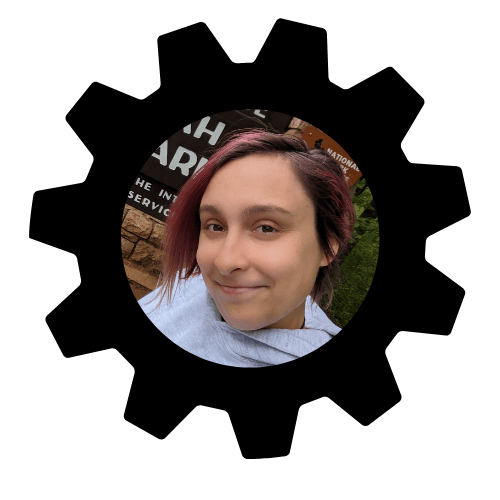
This week’s interview is with Beth Anne Hosek, a fourth-year Ph.D. candidate in the College of Education and Human Development at George Mason University. Working under the guidance of Dr. Anastasia Kitsantas, Beth is pursuing her Ph.D. in Education with a focus on Educational Psychology and Research Methods. She anticipates graduating around May 2026—as long as everything goes according to plan (and research always goes according to plan, right?).
Beth has already contributed to Cogbites! Her first post explores how parents’ confidence in supporting their adolescents affects how those adolescents cope and learn.
Without further ado, here’s our interview with Beth:
Why did you decide to pursue cognitive science?
I’ve always enjoyed learning, no matter the topic, so when I set out to pursue higher education, I gravitated toward fields that focus on how we learn. Educational psychology became a natural fit—it’s a fulfilling area of study and allows me to contribute meaningfully to understanding the world around us.
What are you currently working on?
So many things! But my primary focus right now is preparing for my dissertation. I’m interested in how adolescents build resilience and how those skills help them regulate themselves and their learning. Resilience and self-regulated learning are deeply intertwined—and that intersection is where I want to dig in.
What’s the most important concept in cognitive science?
Two concepts in educational psychology are at the core of how I see learning and research: self-regulated learning and self-efficacy. First, self-regulated learning is something anyone can learn to do, regardless of their background. It’s a powerful tool for growth. Second, self-efficacy—or how much you believe in your ability to do something—is a game-changer. The more you believe in your ability to learn, the more likely you are to engage with learning and ultimately succeed.
What sparked your interest in science communication?
Science shapes everything we know about reality, and understanding the “how” and “why” behind that reality makes life so much richer. I’m especially passionate about psychology, neuroscience, and education, and I love sharing that passion with people outside of academia. Communicating science is a way for me to connect, engage, and spread that excitement!
Is there anything else you want us to know about you?
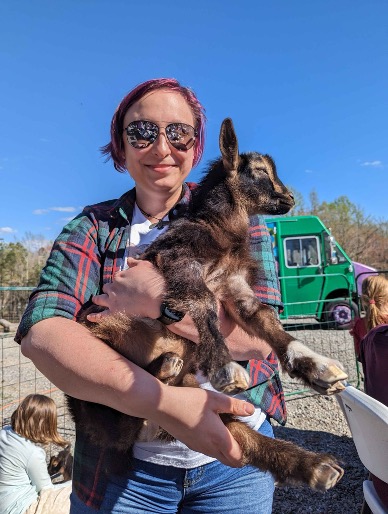
I’m a huge nerd! I love reading, writing, anime, manga, tabletop and video games—you name it. I balance all that with outdoor adventures like hiking and road tripping, and I also love spending time with my friends’ pets.
You can learn more about Beth and see some of her work on her portfolio website.
 cogbites
[…] this is a chance to get to know some early-career scientists even better. Last time, we got to know Beth Hosek, a fourth-year PhD student in Educational Psychology and Research Methods at George Mason […]
LikeLike