Welcome back to our Cogbites interview series, where we talk with cognitive scientists about what inspires their work in the lab and beyond.
As a reminder, you can learn a little about our own team of contributors by reading their bios (either on our author page or at the bottom of each post), but this is a chance to get to know some early-career scientists even better. Last time, we got to know Jean Luo, a fourth-year Ph.D. candidate in Social Psychology at the University of Southern California.

This week’s interview is with Colin McArdle, a fifth-year Ph.D. student in Neuroscience at Wake Forest University School of Medicine, working in the Raab-Graham Laboratory. Colin is finalizing his dissertation and preparing to defend in September! You can also connect with him on LinkedIn.
Colin’s research focuses on the preclinical mechanisms driving synapse loss in Alzheimer’s disease and on therapeutic approaches to prevent or reverse this damage. He’s also a returning Cogbites contributor—you may have read his posts on topics such as how GABA can be both calming and exciting, whether coffee could be prescribed for Alzheimer’s, and the big impacts of small synaptic changes.
Without further ado, here’s our interview with Colin:
Why did you decide to pursue cognitive science?

It all started in high school when I took a psychology class and was amazed that a single organ—the brain—could control so much of how we think, feel, and experience the world. That curiosity stuck with me and led me to major in neuroscience in college.
My interest deepened when I began learning about Alzheimer’s disease. I was struck by how core memories, the ones tied to our identity and sense of self, could slowly fade away because of disruptions in neuronal communication. The idea that something so central to who we are could unravel was both heartbreaking and motivating—and it inspired me to pursue research to better understand and address it.
What are you currently working on?
My current research investigates how inhibitory GABAB receptors might play a neuroprotective role in Alzheimer’s disease. One of the hallmarks of Alzheimer’s is excessive brain activity that damages synaptic connections and contributes to memory loss.
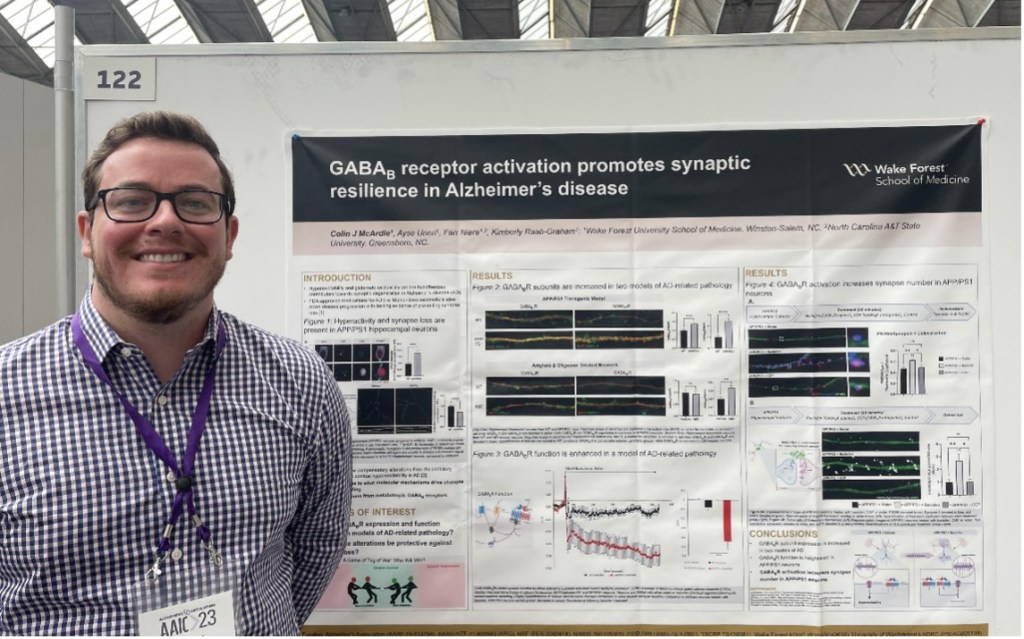
GABAB receptors act like brakes in the brain, calming this overactivity. I study whether activating these receptors pharmacologically can protect the brain and reduce the core pathologies and symptoms we see in Alzheimer’s models. The long-term goal is to determine whether targeting these receptors could be a promising therapeutic strategy to slow or treat Alzheimer’s progression.
What’s the most important concept in cognitive science?
For me, one of the most important concepts is the heterogeneity of neurodegenerative diseases like Alzheimer’s. While memory loss is often seen as the defining feature, patients experience a wide range of other symptoms (depression, anxiety, apathy) that vary significantly across individuals.
Recognizing this complexity is essential when designing clinical studies or developing treatments. Tackling Alzheimer’s isn’t just about improving memory; it’s about addressing the full spectrum of cognitive, emotional, and behavioral changes that impact patients’ daily lives.
What sparked your interest in science communication?
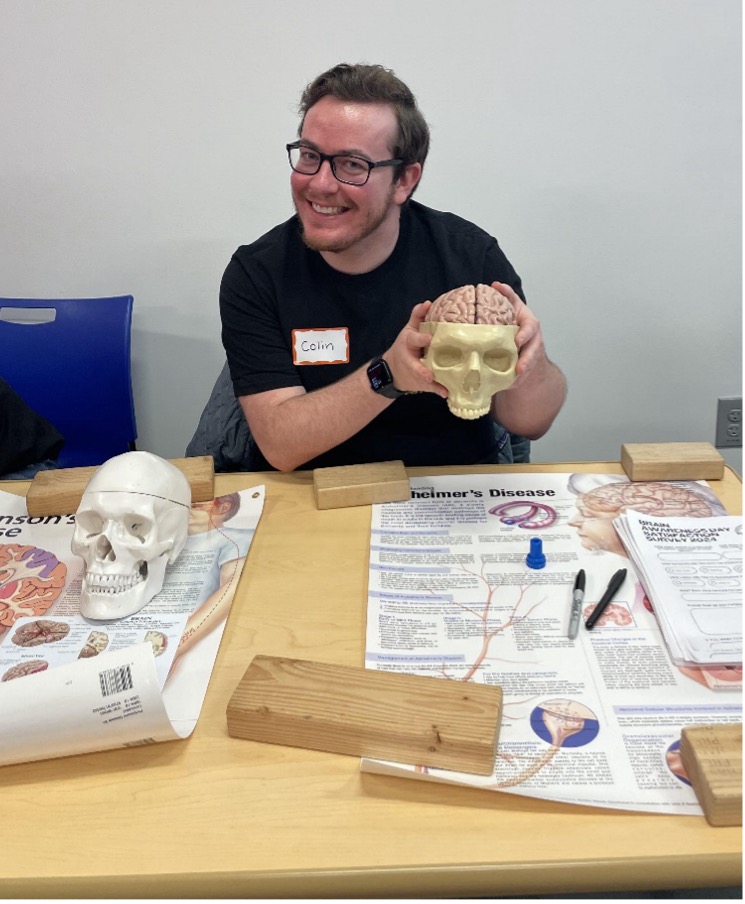
My passion for science communication began with my involvement in the Brain Awareness Council at Wake Forest. I loved translating complex neuroscience into engaging, accessible material for classrooms and community events. One of the highlights has been helping organize our annual outreach day, where the public can explore real brains and hands-on neuroscience activities.
As Social Media Chair, I’ve also had the chance to blend science with creativity—designing visuals and crafting content that makes neuroscience approachable and exciting. It’s rewarding to see how effective communication can bridge the gap between research and public understanding.
Is there anything else you want us to know about you?
Outside of the lab, I’m a big foodie and enjoy experimenting in the kitchen—whether that’s testing out new recipes or inventing cocktails. I also love DIY interior design projects, from small upgrades to giving IKEA furniture a unique twist. Most recently, I’ve started playing pickleball. My serve may still need some work, but I’m having a great time learning.
 cogbites
[…] this is a chance to get to know some early-career scientists even better. Last time, we got to know Colin McArdle, a fifth-year Ph.D. student in Neuroscience at Wake Forest University School of […]
LikeLike
[…] Colin is a neuroscience PhD student at Wake Forest University. His research focuses on the role of inhibitory GABAergic receptors in a preclinical model of Alzheimer’s disease. Outside of the lab, Colin enjoys cooking, crafting, and DIY interior design projects. You can learn more about Colin via this interview post! […]
LikeLike