Reference: Louis Marti, Shengyi Wu, Steven T. Piantadosi, Celeste Kidd; Latent Diversity in Human Concepts. Open Mind 2023; 7 79–92.
When I say the word “dog,” does it mean the same thing as when you say the word “dog”? Surely, our language requires that when we say the same word, we mean the same thing right? Of course, many words have multiple meanings, like the word “quarter,” which can refer to a coin in the United States, or a period of time, or 25% of anything really. But here, I am talking about a simple word like dog, which one might think really should have a singular meaning.
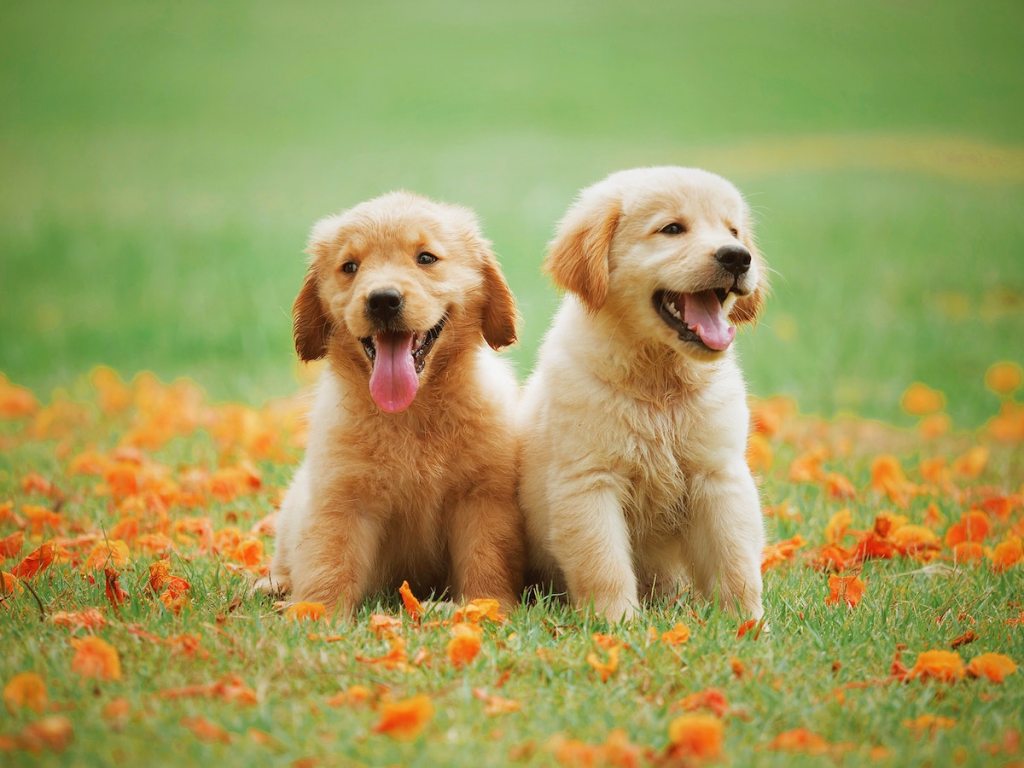
If this proposal is true, we should all agree that dogs are cute, fuzzy, (generally) have four legs, and like to play fetch… right? But, what if I’m allergic to dogs? Then, when I say the word “dog,” I mean something that’s cute, fuzzy, but untouchable (or else I start sneezing and get hives). If you have never experienced the unjustness of pet allergies, maybe the concept “dog” doesn’t elicit much in terms of congestion-related issues. But for me it does, and thus it’s hard to separate my own sneezy experiences from the unproblematic concept of dog that everyone else seems to have. This is all to say that our own life experiences mostly likely play a role in how we come to understand and integrate concepts into our understanding of the world.
In a recent paper, Louis Marti and colleagues have shown that it is common for words to carry diverse meanings between people. Furthermore, some concepts are more affected by hidden differences in understanding than others. For example, the word “dog,” may be similarly used by different people (even us allergy sufferers still admit that dogs are cute). But other concepts are potentially much, much harder to nail down, like peace or prosperity. With this intuition in mind, Marti and colleagues explored participants’ conceptions of common animals and famous U.S. politicians. Their hypothesis was that characteristics of animals would be more consistent across participants, whereas characteristics of politicians would be more likely to vary from person to person — most likely due to differences associated with political affiliation.
To investigate their hypothesis, the authors conducted two studies. In Experiment 1, they recruited nearly 1,800 online participants to rate the similarity between randomly selected animals (e.g., a finch) or politicians (e.g., Barack Obama). For example, if a participant was assigned to the politician condition, and assigned Ronald Reagan as their target politician, they might be asked “Who is more similar to Ronald Reagan, Barack Obama or Abraham Lincoln?”
Using these ratings data, the authors used several clustering techniques to determine how many similarity clusters were exhibited in terms of each of the politicians and animals. For example, if a group of people rated Obama very similarly to Lincoln, while others rated Reagan much more similarly to Lincoln, and Obama as not all similar, these might be the types of clusters we’re talking about here.
Using this cluster analysis, the researchers found that, consistent with their hypothesis, conceptual diversity was greater for politicians than for animals. Whereas animals ranged in the number of clusters between 5 and 13 by one metric, politicians ranged from 9 to 19 clusters. In other words, people tended to have more idiosyncratic understandings of politicians than animals. That said, not everyone treated each animal concept exactly the same way. Indeed, even for the humble chicken people exhibit a few different understandings of this concept.
Perhaps even more interestingly, people were not aware of these interindividual differences in understanding. When asked to make predictions about how many people would agree with their ratings, participants systematically under-estimated the diversity of understanding that their fellow raters would exhibit. This outcome suggests that not only are we using words to represent different concepts, but also that we are not attuned to this fact. Perhaps our diverse understanding of concepts can partially explain why we tend to talk past one-another when it comes to political concepts.
In a second experiment (N = 1,000 Prolific users), using the same animal and politician stimuli as Experiment 1, the authors asked these new participants whether a successive list of adjectives fit each of the animals. For example, they asked, “is a finch smart?” The participants could answer “yes” or “no.”
As can be seen in the figure below, some concepts showed a lot of disagreement. For example, participants were about 50% likely to endorse that whales were “sweet.” Basically, it will be a 50-50 coin flip if you ask a random person whether a whale is “sweet.” In contrast, other adjective-concept pairings showed near complete agreement: “Is a whale gigantic?” Everyone seems to think the answer is “yes.”

Taken together, evidence from these two experiments demonstrates that people do not necessarily hold the same understandings and associations of relatively common concepts, such as animals and politicians. These findings speak to the everyday misunderstandings we may have when talking to people who might be thinking about things in a different way than we do. Furthermore, we may underestimate the ubiquity of these differences—something to keep in mind next time you’re arguing passionately with a friend who thinks cats are cuter than dogs, when of course the objectively correct answer is that dogs are cuter.
 cogbites