Welcome back to our Cogbites interview series, where we chat with cognitive scientists about what inspires their work—both in the lab and beyond.
As a reminder, you can learn more about our team of contributors by reading their bios on our author page (or at the bottom of each post). This series gives us the chance to spotlight early-career researchers and learn more about their paths into cognitive science. Last time, we featured Shriya Biswas, whose research interests include biopsychosocial aging, health equity, and health disparities.
This week’s interview is with Becca Carson (she/her), a psychology master’s student in the Cognitive and Neural Sciences track at Simon Fraser University. Becca studies how people control their attention using electroencephalography (EEG), which records the brain’s electrical activity, and event-related potentials (ERPs), which reveal brain responses associated with specific events. Her research interests grew out of her experience working with clinical EEG, and she’s also interested in how neurotechnology might support cognitive performance.
Becca is also a Cogbites contributor! You may have read her recent article, Can Brain Waves Reveal Attention Difficulties In ADHD?, which explores how researchers use EEG to study differences in selecting relevant information and filtering out distractions in children with ADHD. With everyday examples and clear explanations of brain signals, Becca helps readers understand what this research could tell us about attention and why more work is needed before these measures could support clinical assessment.
Without further ado, here’s our interview with Becca:
Why did you decide to pursue cognitive science?
Like other authors here, my interest in cognitive science came from my interest and work in cognitive neuroscience. When I started my undergraduate degree in psychology, I fully intended to become a counselling psychologist. That changed during the COVID pandemic, when I became fascinated by the emerging research on how the virus affects smell, taste, attention, and memory.
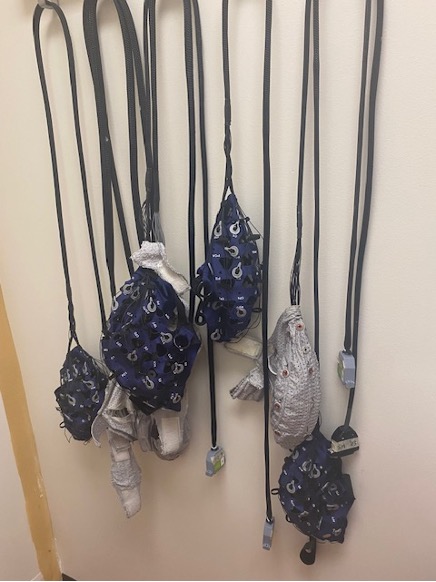
I decided to nurture this interest by enrolling in more cognitive psychology, biology, and neuroscience courses, volunteering and interning at neuroscience-related organizations, and completing an honours thesis under two neuroscientists. Along the way, I also grew fascinated by neuroscientific methods, especially electroencephalography (EEG). My interest in EEG deepened while volunteering at a brain injury organization, where I came across a broken neurofeedback/biofeedback system that I ended up fixing.
Near the end of my undergraduate degree, I landed a job as a neurofeedback technician, where I learned how to record and monitor clients’ brain wave activity using EEG and collect their event-related potentials (ERPs) during attention-demanding tasks. That role cemented my interest in the cognitive neuroscience of attention and led me to graduate school, where I now use EEG and ERPs to study how people attend to salient, or “eye-catching,” items.
What are you currently working on?
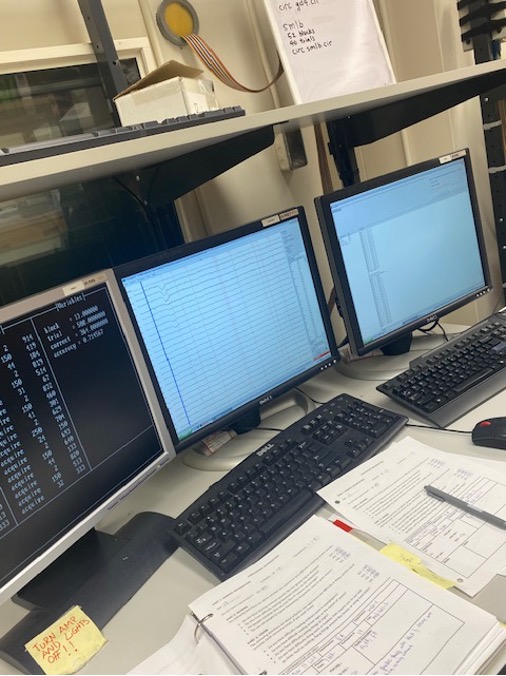
Broadly, I use EEG, ERPs, and reaction time measures to study how the brain attends to salient or “eye-catching” items. I’m currently investigating how people configure an attentional control set when searching for a specific target—in other words, how they prepare their attention to find what they’re looking for.
For example, imagine you’re looking for a friend in a red shirt. Will your attention be captured by other people wearing similar red shirts, or by any brightly coloured shirt? What guides your search for your friend: the specific colour red, or any shirt that stands out?
It may not seem obvious at first, but this type of research has far-reaching implications for marketing, clinical disorders, and neurotechnology.
What’s the most exciting concept in cognitive science?
Probably a popular and stereotypical answer, but for me it’s brain-computer interfaces (BCIs). Witnessing people use their brain activity to control external technology—to move their body, play video games, or spell out words just by looking at a letter—is like science fiction becoming reality.
I’m especially drawn to non-invasive, ERP-based BCIs. They’ve shown some promising results, but many issues remain with using ERPs to control external technology. I’m also excited about neurotechnology becoming more commercially available to everyday people and the ethical questions that come with it.
What sparked your interest in science communication?
My interest started early in my undergraduate degree but became a real focus near the end. I recall constantly hearing classmates say they disliked the “hard science” psychology courses because the material was difficult to understand or poorly communicated. Since that was the side of psychology I was most interested in, it stuck with me.
This interest grew during my gap year working in clinical EEG, which required me to explain every step of the technical process to patients in a way that was clear and put them at ease. More recently, my graduate supervisor, who has a very specific and effective writing style, has also encouraged me to practice writing more clearly.
Most important to me, however, is my mission to explain my research to my family in a way they can fully understand and remember. They always try their best, but they still admit they don’t know how to explain what I do when people ask!
Is there anything else you want us to know about you?
I’m passionate about promoting cognitive neuroscience and neurotechnology to aspiring scientists, particularly other girls and women, and I love volunteering with organizations that share this interest.

